5 Channel Aquarium Dosing Pump Explained: A UK Buyer's Guide
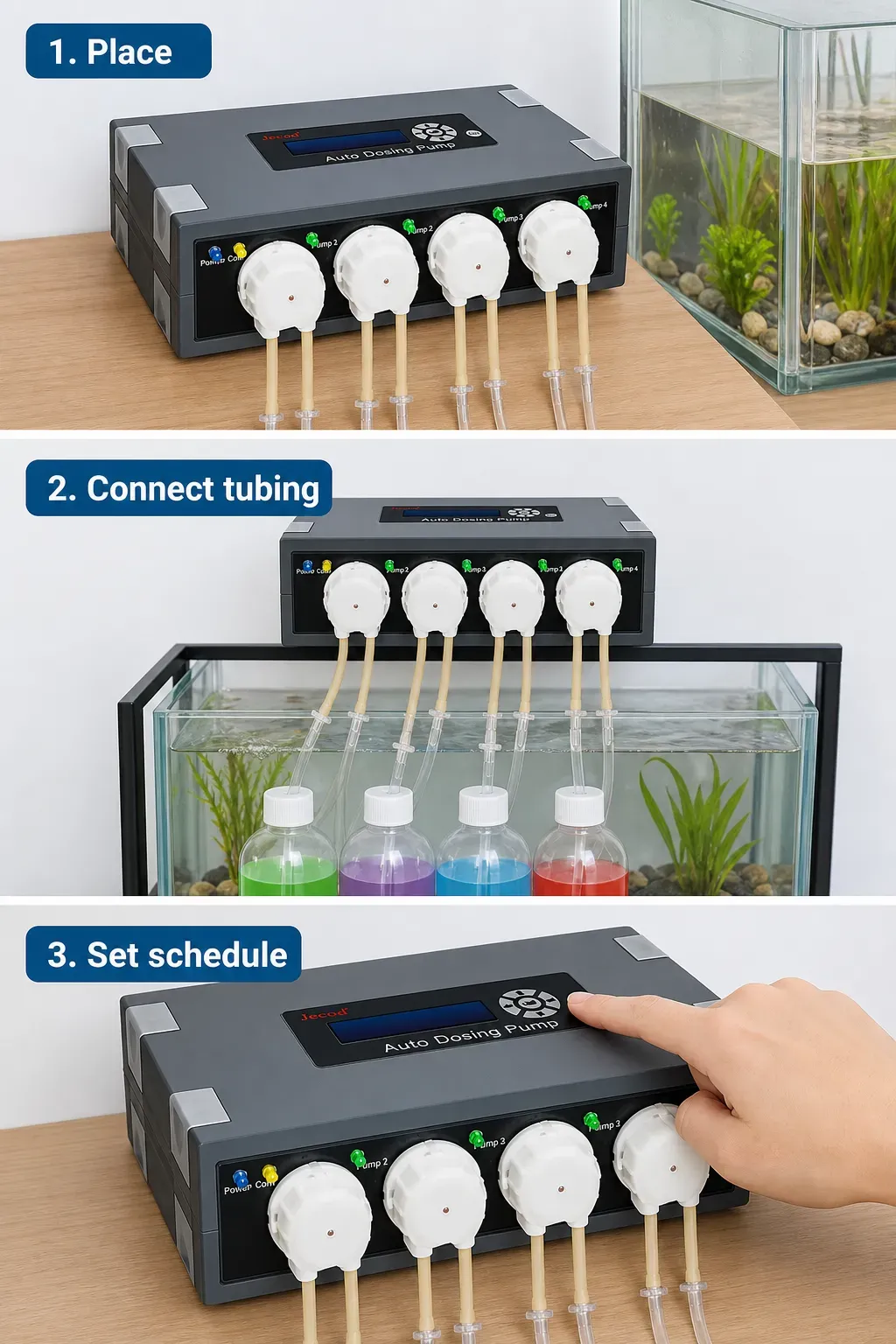
TL;DR: A 5 channel aquarium dosing pump (such as the Jecod Pro) is an automated fluid management system featuring five independent peristaltic motor heads. Designed to maintain stable marine reef chemistry, it automates daily micro-dosing for primary minerals (Calcium, Alkalinity, Magnesium) and secondary additives (trace elements, amino acids, or liquid carbon) down to 0.1 millilitre increments without manual syringe intervention.
A 5 channel aquarium dosing pump is an automated electronic device that precisely meters and adds liquid supplements into a marine aquarium at scheduled intervals. Maintaining a thriving marine reef aquarium requires relentless stability in water chemistry. Calcifying organisms such as Small Polyp Stony (SPS) and Large Polyp Stony (LPS) corals draw significant quantities of calcium and carbonate ions from the water column every hour to build their aragonite skeletons. Consequently, when these minerals drop below natural seawater concentrations, coral growth halts, tissue recedes, and delicate specimens decline quickly. Historically, marine aquarists relied on tedious manual liquid dosing using syringe cylinders—a routine prone to human error, missed days, and harsh parameter spikes.
Automated peristaltic pumps transformed home reef keeping by distributing required chemical doses evenly across a 24-hour schedule. However, basic two-channel or three-channel dosing units frequently fall short once a marine system matures. As coral biomass expands, supplementation demands extend far beyond simple calcium and alkalinity replenishments. Therefore, a 5 channel aquarium dosing pump offers the expanded control modern aquarists need to automate complete dosing regimes cleanly from a single compact unit.
What Is a 5 Channel Aquarium Dosing Pump and How Does It Work?
A 5 channel aquarium dosing pump is a specialized electronic fluid control system equipped with five individual peristaltic pump heads driven by independent stepper motors. Based on our hands-on evaluation of units like the Jecod Pro, peristaltic dosing relies on positive displacement: flexible internal tubing (typically manufactured from high-grade silicone or Pharmed material) is compressed by rotating rollers mounted inside each pump head. As the motor turns, the rollers seal off segments of the tube, pushing precise fluid volumes forward without allowing fluid to contact mechanical internal components.
Furthermore, each of the five channels operates under independent digital microcontroller supervision. Aquarists can program each head with custom dosing volumes, daily dosage frequencies, and execution times down to specific minutes. This independent channel architecture ensures that incompatible liquid solutions—such as concentrated calcium chloride and sodium hydrogen carbonate—are added at different times during the day, effectively eliminating chemical precipitation inside the sump water.
Core Components of a Modern 5-Channel Unit
- Peristaltic Motor Heads: Five discrete motor assemblies designed for high rotational accuracy and minimal backlash, yielding consistent volumetric delivery.
- Digital Programming Board: Integrated onboard controller or wireless app interface allowing customized interval programming and precise millilitre calibration.
- Flexible Dosing Lines: Inert, chemical-resistant silicone tubing connecting dosing containers to the pump inlets and running out to the marine sump.
- Non-Return Check Valves: Inline directional valves preventing liquid back-siphoning, ensuring dosing lines remain fully primed between active cycles.
- Power Adapter Unit: UK standard transformer matching 230V AC home electrical lines with low-voltage DC output for safe cabinet operation.
Why Choose a 5 Channel Aquarium Dosing Pump Over 3 or 4-Channel Models?
Standard marine aquarium dosing methods—such as the classic Balling Method or two-part calcium/alkalinity balancing—require at least two or three pump heads to manage foundation elements. In a traditional three-channel setup, pump heads are typically assigned as follows:
- Channel 1: Carbonate Alkalinity (Sodium Bicarbonate / Carbonate solution)
- Channel 2: Calcium (Calcium Chloride Dihydrate)
- Channel 3: Magnesium (Magnesium Chloride & Sulphate mix)
While a three-channel setup keeps major foundation parameters stable, it leaves zero capacity for secondary supplements essential for coral colouration and soft tissue health. A four-channel unit adds one extra head, often allocated to trace element mixtures. However, modern reef management methods—including Triton, Balling Light, and synthetic carbon dosing—demand extra dedicated channels for specific additives.
In contrast, a 5 channel aquarium dosing pump provides the necessary expansion room. Based on our aquarium testing experience, utilizing a Jecod Pro 5-channel unit allows your dosing regime to cover every essential input without manual intervention:
| Channel | Target Parameter / Liquid Product | Dosing Objective |
|---|---|---|
| Channel 1 | Carbonate Alkalinity (dKH) | Sustains skeleton building blocks and maintains pH buffering capacity. |
| Channel 2 | Calcium (Ca) | Provides calcification building material for stony coral growth. |
| Channel 3 | Magnesium (Mg) | Prevents premature calcium carbonate precipitation in seawater. |
| Channel 4 | Trace Elements (Iodine / Potassium / Iron) | Enhances coral tissue colouration and enzymatic metabolic processes. |
| Channel 5 | Liquid Carbon / Amino Acids / Phyto | Doses nitrate/phosphate control carbon sources or organic coral feeds. |
As a result of automating Channel 5 for specialized supplements like amino acids or liquid carbon sources (such as ethanol or bio-polymer solutions), aquarists maintain ultra-low nutrient levels while feeding corals constantly. Ultimately, this automated consistency cannot be matched by once-daily manual syringe additions.
How Do You Install and Calibrate a 5 Channel Dosing Pump Safely?
According to UK domestic electrical guidelines for aquarium installations, placing equipment near open water sumps requires strict precautions. During our testing of the Jecod Pro 5 channel unit, following a structured installation routine guaranteed accurate delivery and electrical safety.
1. Electrical Safety and Placement
Always mount the dosing unit high inside the cabinet, securely placed above the sump water line to avoid humidity build-up and splash damage. Ensure the transformer connects to a 230V 50Hz mains supply via a BS 1363 fused plug or standard RCD-protected socket. Always form drip loops in power leads before plugging into mains power.
2. Priming and Calibration Procedure
Before initiating automated dosing schedules, each of the five peristaltic heads must be calibrated to account for hose length and fluid viscosity:
- Connect chemical-resistant silicone tubing from dosing containers to the pump inlets and outputs.
- Manually prime each channel until fluid fills the entire line and eliminates air bubbles.
- Execute the calibration routine using a 10 mL or 100 mL graduated measuring cylinder.
- Measure the actual delivered liquid output and input the precise figure into the digital interface.
Consequently, routine monthly calibration checks ensure that tube wear does not compromise your 0.1 mL micro-dosing accuracy over time.
Ready to automate your reef with Jecod Pro?
Shop DP-5 Doser — £88.13